
Knowing what to grow in a greenhouse is the difference between a productive season and a disappointing one.
If you just set up a greenhouse or you're still deciding whether to buy one the question that matters most isn't "what can I grow? It's "what should I grow, given my exact setup?" A heated greenhouse in Georgia and an unheated one in Minnesota are two completely different growing environments, even though they're technically the same type of structure. Getting this right from the start saves you a season of disappointment.
This guide walks through exactly that: how to match your plant choices to your greenhouse's heating status and your climate zone, which vegetables, herbs, and fruits are worth the space, which common garden crops actually do worse under glass, and how to sequence your planting across a full year instead of just spring and summer.
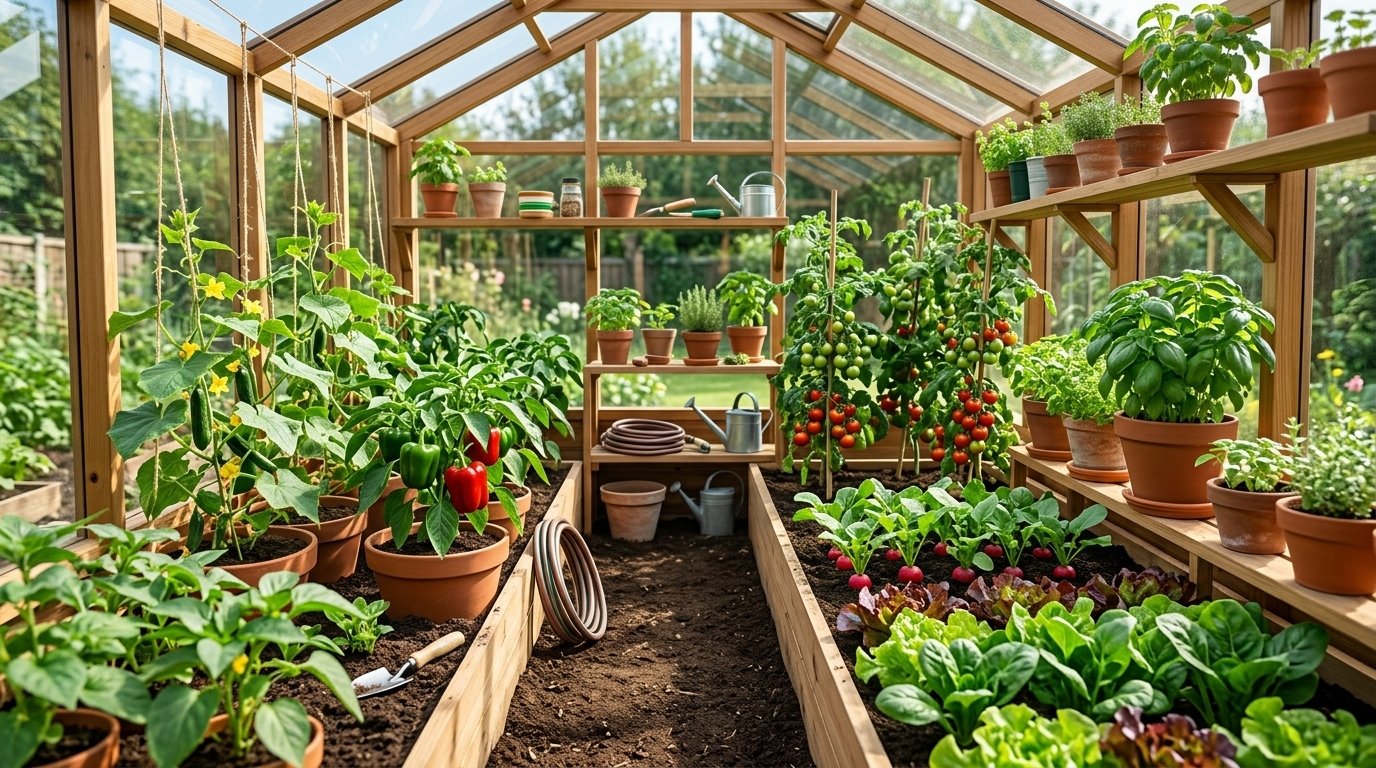
Quick Answer: The Easiest Crops to Start With
If you only take one thing from this article, take this: don't try to grow everything in your first season. Start with a handful of forgiving, fast-growing crops, get a feel for how your greenhouse behaves, and expand from there.
For most beginners, the best starting lineup is lettuce, radishes, basil, and cherry tomatoes. All four germinate quickly, tolerate minor care mistakes, and give you a harvest within weeks rather than months. Once you understand how your greenhouse holds heat and humidity, you can branch into more demanding crops like cucumbers, peppers, and melons with much better odds of success.
Step One: Figure Out What Kind of Greenhouse You Actually Have
Before deciding what to grow in a greenhouse, you need to answer two questions that shape everything else: is your greenhouse heated, and what USDA hardiness zone are you growing in? Skipping this step is the single biggest reason beginners end up disappointed with their first season.
Heated vs. Unheated: Why It Changes Everything
An unheated greenhouse still does real work. Even without supplemental heat, the glass or polycarbonate traps solar radiation during the day and slows heat loss at night, so the interior typically stays several degrees warmer than the outside air and offers real protection from wind, light frost, and heavy rain. That's enough to grow a wide range of cool-season crops earlier and later in the year than you could outdoors.
What an unheated greenhouse can't do is reliably protect tender, heat-loving plants through a hard freeze. If your winter nights regularly drop well below freezing, tomatoes, peppers, cucumbers, and other warm-season crops will struggle or die without added heat, no matter how sunny the days are.
A heated greenhouse removes that ceiling. With a thermostat-controlled heater keeping nighttime temperatures above freezing, you can grow warm-season crops through more of the year and start seedlings earlier in spring. The trade-off is energy cost, which is why most home growers use heat selectively enough to protect tender crops through a cold snap, not necessarily to run a tropical greenhouse all winter.
Practical takeaway: If your greenhouse is unheated, build your plant list around cool-season and moderately tender crops, and treat anything genuinely tropical or frost-sensitive as a summer-only experiment. If it's heated, you have far more flexibility, but it's still worth checking your minimum nighttime temperature against what each crop actually needs before investing in seedlings.
Why Your Hardiness Zone Still Matters Inside a Greenhouse
It's a common assumption that a greenhouse cancels out your local climate. It doesn't it shifts it. A greenhouse extends your growing season and buffers temperature swings, but it doesn't turn a Zone 4 winter into a Zone 9 winter. Your USDA Plant Hardiness Zone still determines your baseline outdoor temperatures, which in turn determines how much protection an unheated structure can realistically provide and how much heating a heated one will need to work.
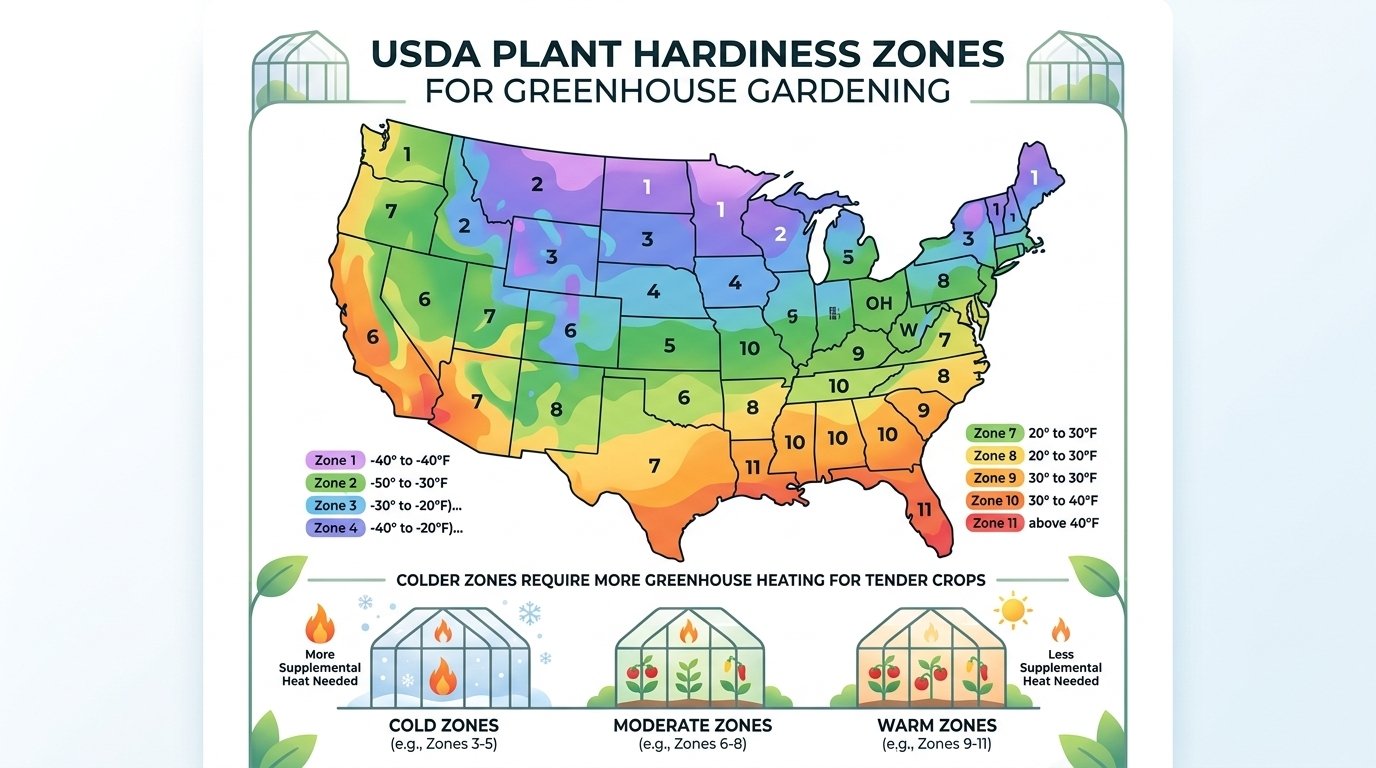
If you don't already know your zone, the USDA Plant Hardiness Zone Map is the standard reference, and it's worth checking before you finalize your plant list it takes less than a minute and prevents a lot of wasted effort.
Best Vegetables to Grow in a Greenhouse
When it comes to what to grow in a greenhouse, vegetables are where most home greenhouses earn their keep. The crops below are the ones that consistently perform well under glass, organized from the most forgiving to the more demanding.
Lettuce and Salad Greens
Lettuce is usually the first thing new greenhouse growers succeed with, and for good reason. It germinates in cool conditions, tolerates light frost, and gives you something to harvest within a month or so of sowing. Loose-leaf and cut-and-come-again varieties are especially forgiving, since you can harvest outer leaves repeatedly instead of pulling the whole plant.
Lettuce is a cool-season crop, which means it performs best in the moderate temperatures of a greenhouse in spring, fall, and winter. In a hot summer greenhouse, it tends to bolt sending up a flower stalk and turning bitter well before you'd expect based on outdoor timing.
Radishes
Radishes are the fastest payoff in this list. Most varieties are ready to harvest in under a month, and they need very little space, which makes them an ideal way to fill gaps between larger plants or to build early confidence in your first season. Like lettuce, they're a cool-season crop best grown outside the peak of summer heat.
Tomatoes
Tomatoes are the crop that convinces most people to buy a greenhouse in the first place. They benefit enormously from the protection a greenhouse offers steady warmth, shelter from wind and heavy rain, and an earlier start than an outdoor garden allows.
Tomatoes generally perform best in daytime temperatures in the mid-60s to mid-80s Fahrenheit, and they need consistent support as they grow, since indeterminate varieties can reach well over head height by midsummer. One detail beginners often miss: because a greenhouse limits wind and reduces pollinator access compared to the open garden, tomato flowers sometimes need a gentle shake or a light tap to release pollen and set fruit properly.
According to UConn Extension, greenhouse tomatoes need nighttime temperatures between 55–70°F to produce pollen properly.
Cherry and grape tomato varieties tend to be more forgiving for a first season than large slicing varieties, since they set fruit more readily and are less sensitive to minor temperature swings.
Cucumbers
Cucumbers thrive in the warm, humid conditions a greenhouse naturally creates, and growing them vertically on a trellis or string support saves floor space while improving airflow around the leaves which matters, because cucumbers are prone to fungal issues in still, damp air.
Most cucumber varieties also benefit from pollination support in an enclosed space. Some modern varieties are bred to set fruit without pollination at all, which can simplify things for a beginner; check the seed packet before you plant if this matters to you.
Peppers and Chilies
Both sweet peppers and chili peppers are well suited to greenhouse growing because they need a long, warm season to fully mature something many U.S. climates don't reliably provide outdoors. They're self-pollinating, which makes them somewhat easier to manage than cucumbers or squash, though a light shake during flowering can still improve fruit set.
Peppers are slower to get going than lettuce or radishes, often taking two to three months from transplant to first harvest, so patience matters more here than with quicker crops.
Herbs Worth Dedicating Space To
Herbs are consistently one of the best returns on greenhouse space, because they take up very little room and reward you almost year-round.
Basil needs consistent warmth and is genuinely one of the more temperamental herbs cold drafts or inconsistent watering will set it back quickly. It rewards regular pinching, which keeps the plant bushy rather than leggy.
Parsley is slower to germinate than most herbs but, once established, produces steadily for months.
Mint grows so aggressively that it should always be kept in its own container — planted directly into greenhouse borders, it will spread and take over.
Thyme and rosemary prefer drier conditions and full sun, and they're good candidates for a spot near the door or vents where humidity is lower.
Cilantro grows best in the cooler parts of the year and, like lettuce, tends to bolt quickly in high summer heat.
Best Fruit to Grow in a Greenhouse
Fruit gets less attention than vegetables in most greenhouse advice, but two options genuinely reward the effort.
Strawberries grow well in pots, growing bags, or hanging baskets, and a greenhouse gives them real advantages over an outdoor bed: earlier fruiting, and protection from the birds and heavy rain that damage outdoor strawberry crops.
Melons are a more ambitious project, better suited to a grower who has already had a successful season with easier crops. They need consistent warmth, a strong support structure if trained vertically, and like cucumbers usually require hand pollination in an enclosed space. Limiting each plant to a handful of fruit generally produces better size and flavor than letting it set an unlimited number.
What NOT to Grow in a Greenhouse (and Why)
This is the part most greenhouse guides skip, and it's arguably more useful than the list of what to grow. A greenhouse is not a universal upgrade — for a specific group of vegetables, it can actually work against you.
The crops to be cautious with are the classic cool-season vegetables: lettuce and spinach (outside of cooler months), carrots, beets, onions, garlic, and the brassica family cabbage, broccoli, and cauliflower. These plants evolved to grow in mild, even cool conditions. When a greenhouse traps summer heat, it pushes these crops past their comfort zone, and the typical result is bolting the plant abandons leaf or root growth and rushes to flower and set seed, often turning bitter or woody in the process.
Potatoes present a related problem: they're heat-sensitive below the soil, and tuber development slows or stalls in a warm greenhouse border, so they rarely outperform an outdoor bed.
There's an important nuance here that's easy to miss: none of these crops are unsuitable for greenhouse growing outright. They're unsuitable for growing in a hot greenhouse during summer. The same lettuce or spinach that bolts in a July greenhouse will do very well sown in early spring or fall, when the structure is providing gentle frost protection rather than trapping heat. Timing, not the crop itself, is usually the real issue.
Perennial plants like strawberries and asparagus also don't handle an unheated greenhouse's freeze-thaw cycling well over winter they're generally better left outdoors or moved into deliberate winter dormancy rather than kept inside a structure that swings in and out of freezing temperatures.
Common Mistake: Assuming "greenhouse" always means "better." For heat-sensitive crops grown in summer, the opposite is often true. Match the crop to the season, not just to the structure.
Heated vs. Unheated: What You Can Realistically Grow
A Seasonal Planting Framework
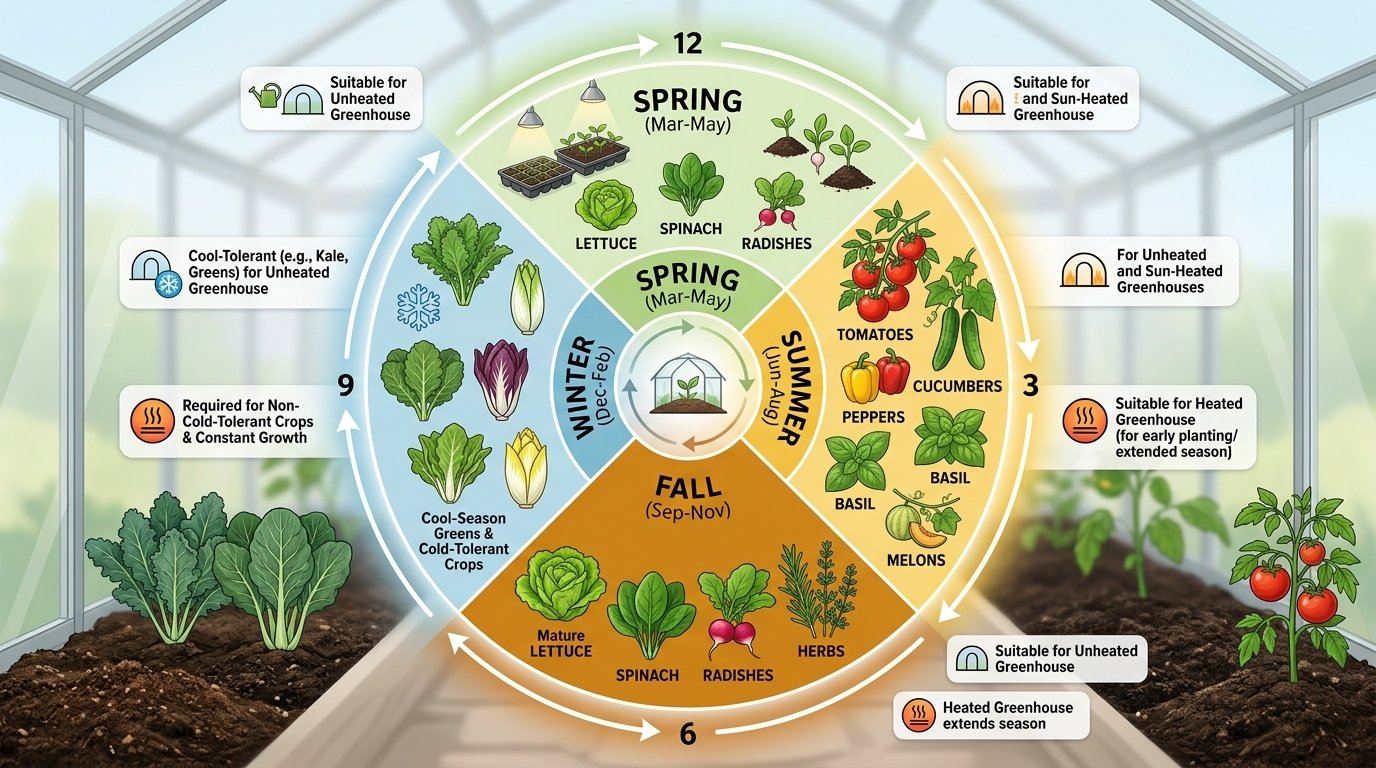
Rather than memorizing a fixed calendar, it helps to think in terms of what to grow in a greenhouse during each season.
Late winter into early spring is when you start seeds for the crops that need a long runway tomatoes, peppers, and other warm-season plants indoors or under a heat source, so they're ready to move into their growing position once temperatures allow. This is also a good window to sow the cool-season crops (lettuce, radishes, spinach) that will struggle once summer heat arrives.
Spring into early summer. is transition season. Cool-season crops planted earlier are often finishing their harvest window just as it's time to transplant tomatoes, cucumbers, and peppers into their final growing spots.
Summer is when the greenhouse works hardest for warm-season crops and hardest against cool-season ones. Expect to be managing heat and humidity actively through ventilation and shading rather than planting new cool-season crops.
Fall brings the return of cool-season growing conditions. This is a strong window to start a new round of lettuce, spinach, and other quick greens, taking advantage of the greenhouse's frost protection as outdoor temperatures drop.
Winter, especially in an unheated structure, is largely about protecting what's already growing and starting very cold-hardy crops or quick indoor-style options like microgreens, rather than attempting anything tender.
Planning Your Space: How Much Can You Actually Grow?
When it comes to what to grow in a greenhouse, one of the most common beginner mistakes isn't choosing the wrong plants it's choosing too many of them. A small backyard greenhouse (roughly 6x8 to 8x10 feet) has real limits, and overcrowding reduces airflow, increases disease risk, and ultimately lowers your total harvest compared to giving fewer plants proper spacing.
As a general planning principle, prioritize vertical growing wherever possible. Cucumbers, tomatoes, and melons trained upward on strings or trellises take up a fraction of the floor space that a sprawling, unsupported plant would need, and the improved airflow around trained plants also reduces fungal disease pressure.
Once you've figured out what to grow in a greenhouse, the next step is making sure everything actually fits.
Checklist — Before You Plant
Confirm whether your greenhouse is heated or unheated, and note your realistic minimum nighttime temperature.
Look up your USDA hardiness zone if you don't already know it.
Choose 3–5 starter crops rather than attempting a full list in your first season.
Check each chosen crop's ideal temperature range against what your greenhouse can actually provide in the coming months.
Plan for vertical growing space before committing floor space to sprawling plants.
Leave enough gap between plants for airflow crowding is one of the most common causes of disease in a greenhouse.
Common Beginner Mistakes to Avoid
Overwatering. A greenhouse holds moisture longer than open ground, and it's easy to water out of habit rather than need. Check the soil before watering rather than following a fixed schedule.
Skipping ventilation. Warm, still, humid air is exactly the environment fungal diseases like powdery mildew and grey mould need to spread. Opening vents and doors on warm days, even in an unheated greenhouse, meaningfully reduces disease pressure.
Ignoring pollination. Because a greenhouse limits wind and reduces insect access compared to the open garden, crops like tomatoes, cucumbers, and melons often need a helping hand a gentle shake of the plant or a light touch with a small brush to set fruit reliably.
Planting cool-season crops in summer without adjusting the calendar. As covered above, this is one of the most common and most avoidable disappointments in greenhouse growing.
Trying to grow everything at once. A shorter, well-chosen list of crops that actually get the attention and space they need will outperform an ambitious list that gets neglected.
Frequently Asked Questions
What is the easiest thing to grow in a greenhouse for beginners?
When figuring out what to grow in a greenhouse as a beginner, lettuce and radishes are generally the easiest crops, because they germinate quickly, tolerate minor care mistakes, and produce a harvest within a few weeks.
Can I grow vegetables in an unheated greenhouse?
Yes. An unheated greenhouse still traps daytime heat and buffers against wind and frost, which makes it well suited to cool-season vegetables like lettuce, spinach, and radishes for most of the year, and to warm-season crops like tomatoes and peppers during the frost-free months in your area.
What should I not grow in a greenhouse?
Cool-season vegetables lettuce, spinach, brassicas, carrots, beets, onions, and garlic tend to do poorly in a hot summer greenhouse, where they bolt or become bitter. They're better suited to the cooler months, when the greenhouse is providing gentle protection rather than trapping heat.
What herbs grow well in a greenhouse?
Basil, parsley, thyme, rosemary, and cilantro all do well. Basil needs the most consistent warmth of the group, while thyme and rosemary prefer drier conditions and tolerate cooler temperatures better.
Do greenhouse plants need to be hand-pollinated?
Some do. Because a greenhouse reduces wind movement and pollinator access compared to an open garden, crops like tomatoes, cucumbers, and melons often benefit from a gentle shake or light hand-pollination to set fruit reliably, especially early in the season before vents are regularly open.
How many plants can I fit in a small greenhouse?
It depends heavily on the crops and how you train them, but the most common beginner mistake is overcrowding. Prioritizing vertical growing for climbing crops like cucumbers and tomatoes, and giving each plant its full recommended spacing, will generally produce a better harvest than packing in as many plants as physically possible.
What can I grow in a greenhouse in winter?
In an unheated greenhouse, winter growing is limited to very cold-hardy crops and quick options like microgreens, since the structure mainly offers frost protection rather than genuine warmth. In a heated greenhouse, you have far more flexibility, depending on the minimum temperature you maintain.
How do I decide what to grow in a greenhouse?
Start by checking whether your greenhouse is heated or unheated, and confirm your USDA hardiness zone. From there, choose 3–5 easy starter crops like lettuce, radishes, basil, and cherry tomatoes before expanding into more demanding vegetables.
The Bottom Line
Deciding what to grow in a greenhouse isn't really about which plants are technically possible it's about what makes sense for your specific setup, right now. That means being honest about whether your greenhouse is heated or unheated, checking that against your local climate, and choosing a handful of forgiving crops before expanding into more demanding ones.
Start with lettuce, radishes, basil, and a cherry tomato or two. Learn how your greenhouse behaves through a full season how it holds heat, how humidity builds up, how it responds to a cold snap and let that experience guide what you add next. A greenhouse rewards attention and good timing far more than it rewards an ambitious plant list.
Learn how your greenhouse behaves through a full season, and once you've got the basics down, our guide to greenhouse gardening tips rounds out the rest of your routine temperature, watering, soil, and pollination.