
If your greenhouse yields have quietly declined over the past year or two, even though your watering and temperature routine hasn't changed, the cause is often sitting right beneath your plants. Greenhouse Soil is the part of greenhouse gardening that fails silently. There's no sudden wilting, no obvious pest, no dramatic overnight collapse just slower growth, smaller harvests, and a nagging sense that something isn't quite right.
Greenhouse soil needs more active management than outdoor garden soil, and once you understand why, the rest of the picture falls into place. This guide to greenhouse soil & fertility walks through the core concepts testing, amendment, structure, nutrient balance, and long-term fertility so you know exactly what your soil actually needs and which specific practice to focus on first.
Quick answer: Greenhouse soil depletes faster than outdoor garden soil because a single bed can produce multiple harvests in one year instead of just one. The core routine that keeps it healthy is simple: test pH once or twice a year, choose your growing structure deliberately (in-ground, raised bed, or container), add organic matter between plantings, and watch for the early signs of nutrient deficiency rather than waiting for a full crop failure.
Why Greenhouse Soil Depletes Faster Than Outdoor Soil
An outdoor vegetable garden typically produces one crop per growing season. Winter arrives, the ground rests, and whatever nutrients the soil has left get a chance to slowly rebuild through natural processes before spring.
According to the University of New Hampshire Extension, most vegetable crops grow best in soil with a pH between 6.0 and 6.8. Clemson University Cooperative Extension's Home & Garden Information Center gives a similar range of 5.8 to 6.5 for general vegetable gardening. Either range is a reasonable target for a greenhouse vegetable garden specifically a basic home soil pH test kit is enough to check where your soil currently sits, and testing before you assume a fertilizer problem is one of the most useful habits you can build.
Did You Know: Continuous greenhouse cropping can deplete soil nutrients faster than a single outdoor growing season, simply because the same bed may be back in production again within weeks of a harvest.
Getting the Foundation Right: Greenhouse Soil pH
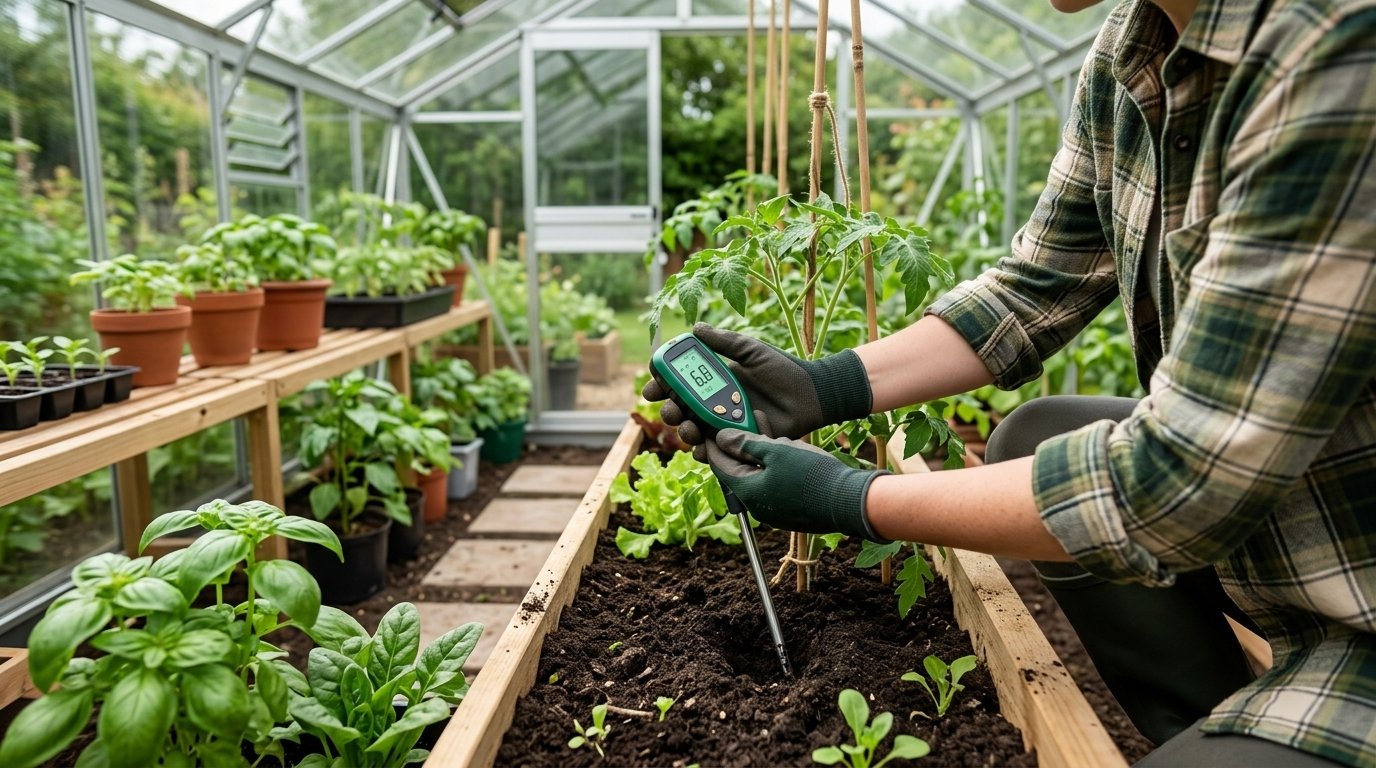
Before amendment, before fertilizer, before anything else, pH is the number that determines whether your plants can actually use the nutrients already in the soil. If pH is too far outside a crop's ideal range, nutrients can be technically present in the soil and still unavailable to the plant's roots which is why a soil that "should" be fertile can still produce weak, stunted growth.
According to the University of New Hampshire Extension, most vegetable crops grow best in soil with a pH between 6.0 and 6.8. Clemson University Cooperative Extension Home & Garden Information Center gives a similar range of 5.8 to 6.5 for general vegetable gardening.
Either range is a reasonable target for a greenhouse vegetable garden specifically. A basic home soil pH test kit is enough to check where your soil currently sits, and testing before you assume a fertilizer problem is one of the most useful habits you can build.
Common Mistake: Assuming fertilizer alone will fix poor growth without first checking pH. Adding more nutrients to soil with an off-balance pH often doesn't help, because the underlying availability problem is still there.
For the full step-by-step process which test kit to use, how to read the results, and what to do if your pH comes back too high or too low our detailed guide on how to test soil pH in a greenhouse walks through it from start to finish.
Choosing Your Growing Structure: In-Ground, Raised Bed, or Container
How you grow shapes how you'll need to manage your Greenhouse soil, so it's worth deciding deliberately rather than defaulting to whatever came with your greenhouse.
Greenhouse Growing Structure Comparison
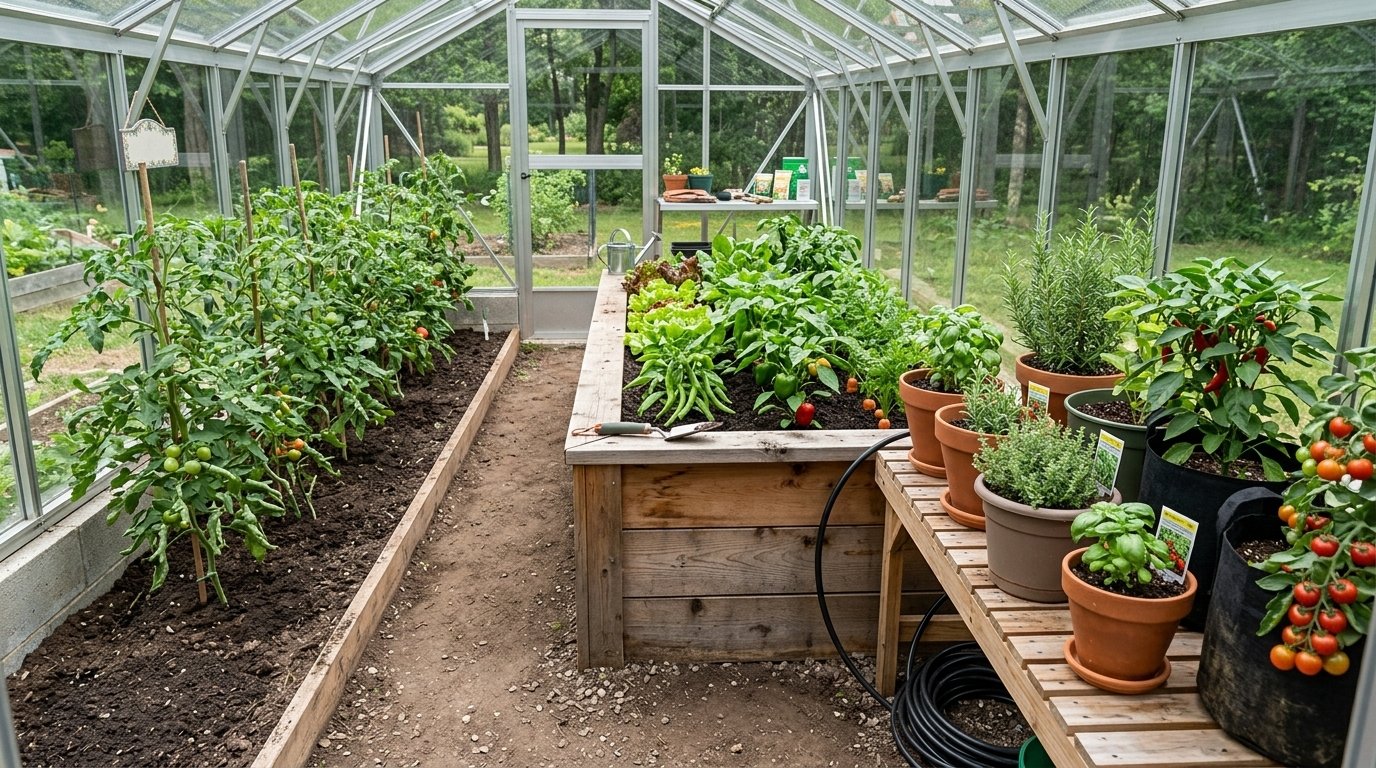
None of these three is universally "better" each is a genuine trade-off between cost, control, and ongoing effort. If you've already chosen raised beds, our guide to the best soil mix for raised beds in a greenhouse covers exactly what ratio of ingredients to use.
Greenhouse Soil Fertility: Keeping Soil Fertile Between Growing Seasons
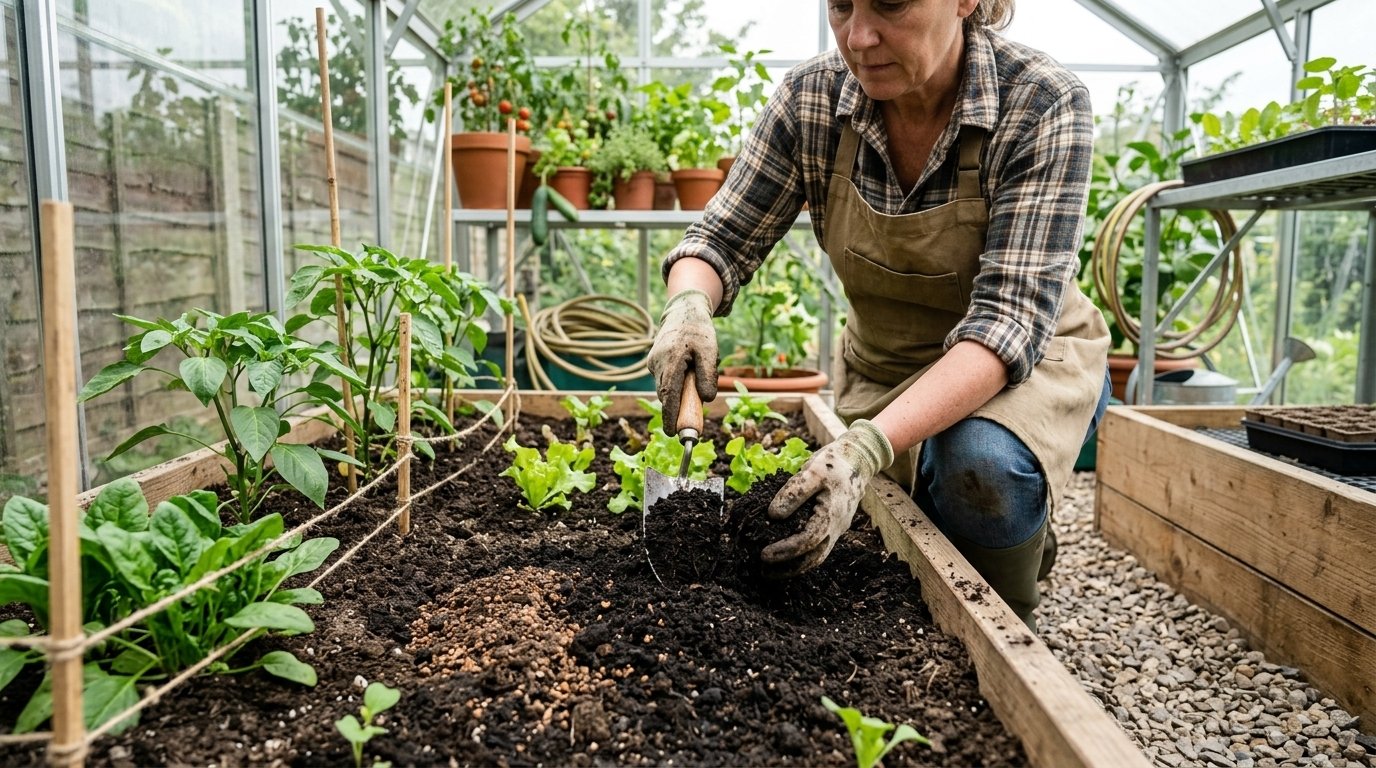
Because greenhouse soil works harder than outdoor soil, amendment isn't a once-a-year afterthought it's an ongoing part of the routine. Adding compost or other organic matter after each harvest, rather than only at the very start of the season, helps replace what the previous crop used before the next one goes in.
Cover crops are a genuinely useful, lower-cost complement to store-bought fertilizer. A short cycle of a fast-growing cover crop between plantings, turned back into the soil before it flowers, adds organic matter and helps rebuild soil structure. It's worth noting that most detailed cover crop guidance available (species selection, seeding rates) is written for large-scale field or cut-flower operations rather than small hobby beds, so treat any specific seeding rate you find as a starting reference to scale down, not an exact prescription for a small greenhouse.
Crop rotation plays a similar role: growing the same nutrient-hungry crop, like tomatoes, in the same spot every single cycle accelerates depletion in that specific area. Rotating which bed or section grows which crop gives each patch of soil more breathing room. If you're planning a full growing calendar, our guide to crop rotation planning for a small greenhouse. goes into the specifics.
For the complete amendment schedule how often, how much, and what to add depending on what you just grew our dedicated guide on how to amend and replenish greenhouse soil between growing seasons covers the full routine.
Recognizing and Fixing Nutrient Deficiencies
Yellowing leaves, stunted growth, and poor fruit set are the most common visible signs that something in the Greenhouse soil isn't right but they can also result from watering problems, temperature stress, or pests, which is exactly why diagnosis matters more than guessing.
A true nutrient deficiency usually shows a recognizable pattern: yellowing that starts on older, lower leaves often points to a nitrogen shortage, while stunted, purplish growth can indicate a phosphorus problem. These patterns aren't something to memorize from a single paragraph they deserve their own careful walkthrough, which is exactly what our guide on how to identify and fix nutrient deficiencies in greenhouse plants provides.
Composting for a Greenhouse: A Sustainable Long-Term Fix
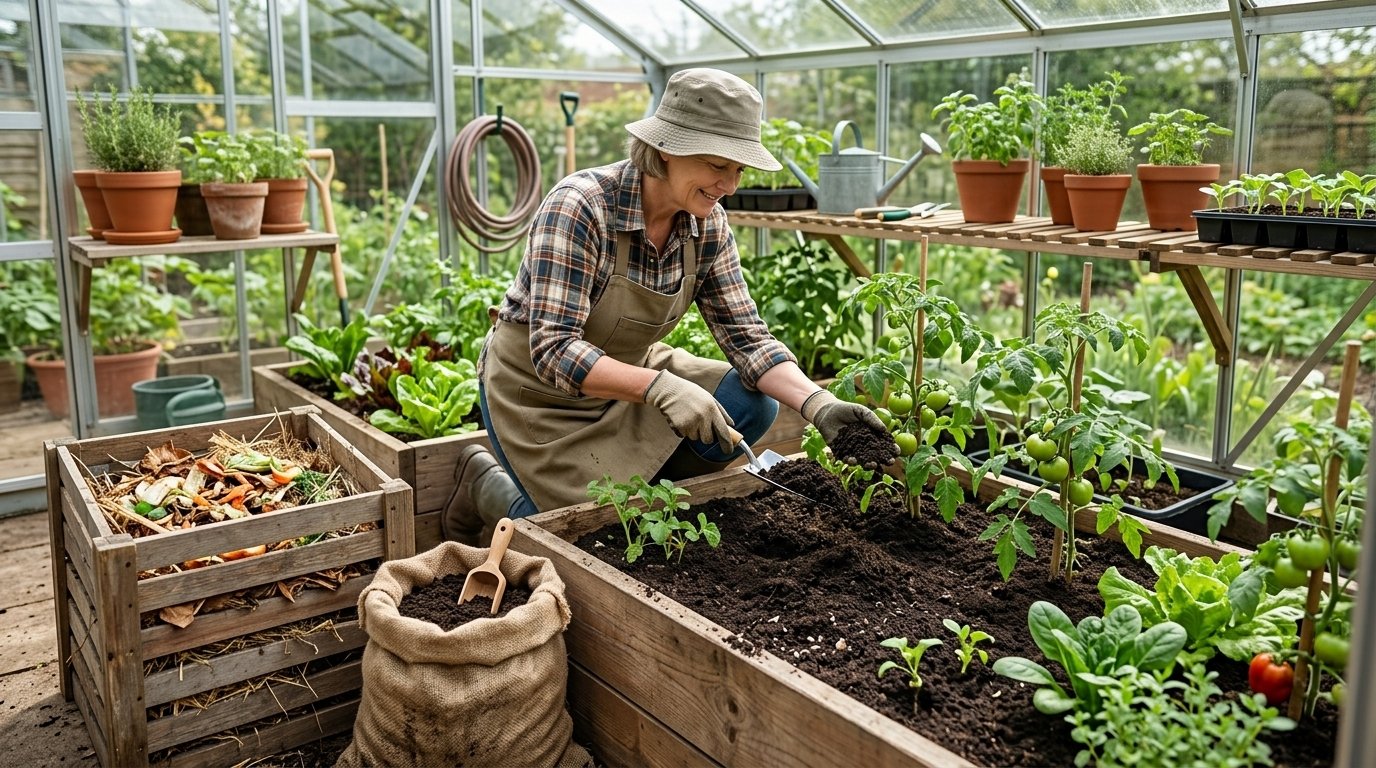
Composting is the most sustainable way to keep feeding your Greenhouse soil without relying entirely on store-bought fertilizer, and it directly addresses the continuous-cropping depletion problem this article opened with. Kitchen scraps, plant trimmings, and other organic waste break down into a nutrient-rich amendment you can work back into your beds between plantings.
It also supports something less commonly discussed but genuinely important: the biological side of soil health. Organic matter feeds the beneficial microorganisms and fungi that help plant roots access nutrients more effectively a slower-acting but real complement to simply testing pH and adding fertilizer. For the full beginner-friendly process, our guide to composting for greenhouse gardens walks through exactly how to get started.
A Quick Note on Soil Health and Plant Resilience
Healthy, well-balanced soil doesn't just produce bigger harvests it also makes plants more resistant to the pests and diseases that thrive in a greenhouse's warm, humid environment. A stressed plant growing in depleted or off-pH soil is generally more vulnerable than a well-fed one, which is one more reason soil care pays off beyond yield alone.
Greenhouse Soil Health Checklist
[ ] Test soil pH at least once or twice a year
[ ] Choose your growing structure deliberately (in-ground, raised bed, or container)
[ ] Add organic matter or compost after each harvest, not just at the start of the season
[ ] Rotate nutrient-heavy crops rather than repeating them in the same spot every cycle
[ ] Watch for early signs of nutrient deficiency rather than waiting for a full crop failure
[ ] Consider a cover crop cycle during any gap between plantings
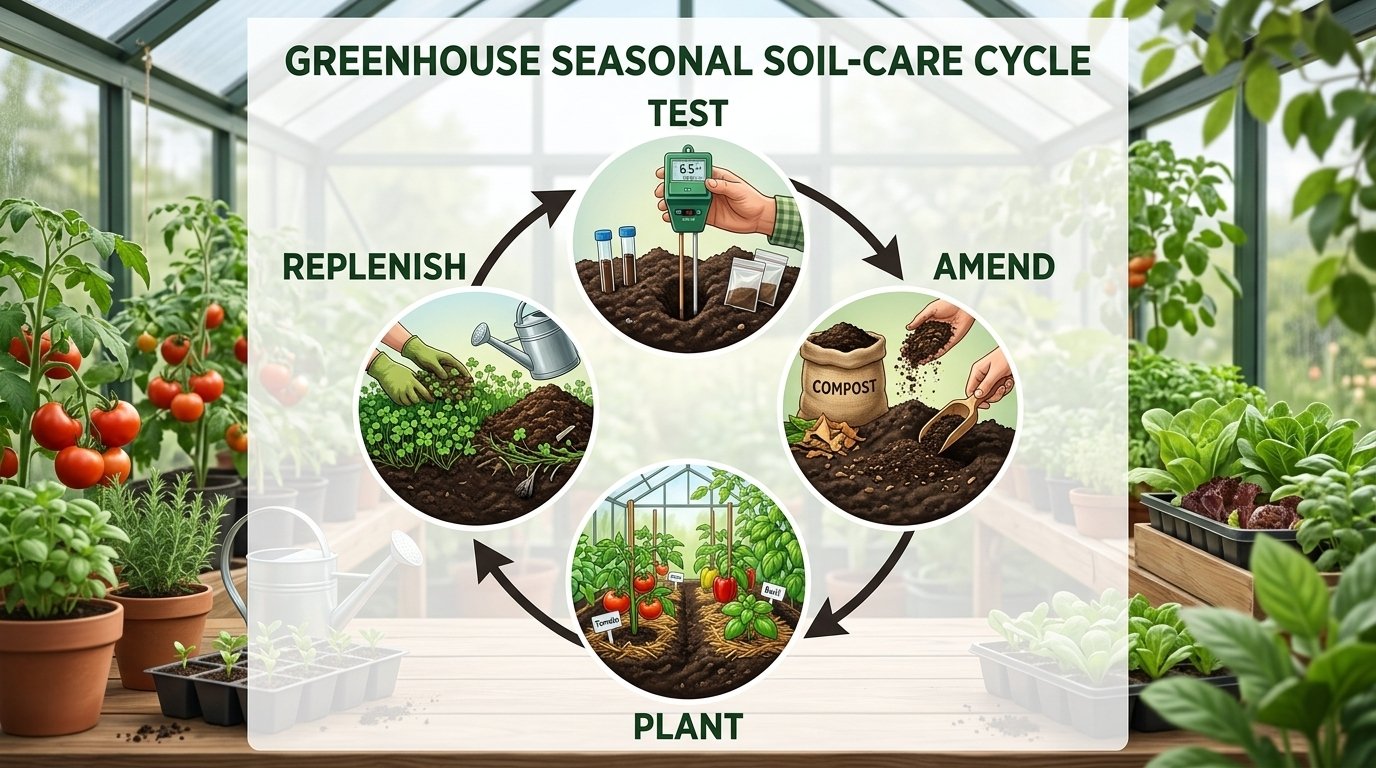
Start with the pH test. Before you change anything else about your soil, test its pH first it's the one step that tells you whether the rest of your soil-care routine will actually work.
Frequently Asked Questions
Why does greenhouse soil need different care than outdoor garden soil?
A greenhouse extends the growing season, which means the same bed can produce multiple harvests in a single year instead of just one. Without a natural winter rest period, nutrients get used up faster and need to be actively replaced through testing and amendment.
How often should I test my greenhouse soil?
Once or twice a year is a reasonable general practice for most home greenhouse gardeners. This is a widely used rule of thumb rather than a figure backed by a specific research study, so treat it as a solid starting point rather than a strict requirement.
What's the ideal soil pH for greenhouse vegetables?
Most vegetable crops grow best with a pH between roughly 5.8 and 6.8, based on guidance from the University of New Hampshire Extension and Clemson University Cooperative Extension. A basic home pH test kit is enough to check where your soil currently sits.
Should I use raised beds, in-ground soil, or containers in my greenhouse?
Each has real trade-offs. In-ground beds give roots the most room but are hardest to fully replace; raised beds offer the best balance of control and effort for most home growers; containers offer the most flexibility but dry out and deplete faster.
What's the difference between soil pH and soil fertility?
Soil pH is a measure of acidity or alkalinity that determines how available nutrients are to plant roots. Soil fertility refers to the actual nutrient content of the soil. The two interact closely soil can be nutrient-rich and still perform poorly if the pH is preventing plants from accessing those nutrients.
Can I compost in a greenhouse, or for a greenhouse?
Yes. Composting kitchen scraps and plant trimmings whether the compost pile itself sits inside or outside the greenhouse produces a nutrient-rich amendment you can work into your beds between plantings.
Bringing It All Together
Managing greenhouse soil and fertility comes down to a repeating cycle rather than a one-time task: test your pH, choose your growing structure deliberately, feed the soil between harvests, watch for early deficiency signs, and keep the cycle going season after season. Understanding why this matters continuous cropping depletes soil faster than a single outdoor growing season is the concept that makes every other soil decision easier.
If you already know which specific part of this routine you need help with, our dedicated guides on soil pH testing, seasonal soil amendment, raised bed soil mixes, nutrient deficiency diagnosis, and composting for greenhouse gardens each go into full depth on their own. And if you're still working through the rest of your greenhouse setup, our complete guide to greenhouse gardening tips covers temperature, watering, and what to grow alongside everything in this article.