
A greenhouse can change what's possible in your garden. It can also become a source of dead seedlings, moldy leaves, and confusion if you don't understand what the enclosed space actually needs from you.Most greenhouse problems come down to the same handful of causes: temperatures swinging too high or too low, humidity building up with nowhere to go, soil that never gets tested or replenished, and plants that need help pollinating because the wind and insects that normally do the job can't get inside. Once you understand these five areas climate, water, soil, pollination, and pest prevention the rest of these greenhouse gardening tips becomes much easier to apply.
This guide walks through each of them in order, using guidance from university Cooperative Extension programs rather than guesswork, so you can build a routine that actually works for your climate and your crops.
Quick answer: The most important greenhouse gardening tips are to monitor temperature and humidity daily, water based on soil moisture rather than a fixed schedule, test your soil at least once or twice a year, hand-pollinate crops like cucumbers and squash if insects can't reach them, and choose beginner-friendly crops such as leafy greens, tomatoes, and peppers for your first season.
Why a Greenhouse Isn't "Set It and Forget It"
It's tempting to think that once a greenhouse is built, it will take care of itself. The glass or plastic walls trap sunlight and heat, so the environment inside should just naturally stay warm and comfortable, right? Not quite. That same trapped heat is exactly why greenhouses can swing from too cold at night to dangerously hot by early afternoon, sometimes within the same day. The enclosed space that protects your plants from frost is the same space that can cook them if you're not paying attention to ventilation. Humidity behaves the same way it has nowhere to escape unless you let it, which means the conditions that help plants also help fungal disease.
None of this means following greenhouse gardening tips is difficult.
It means it rewards a small daily routine more than it rewards expensive equipment.
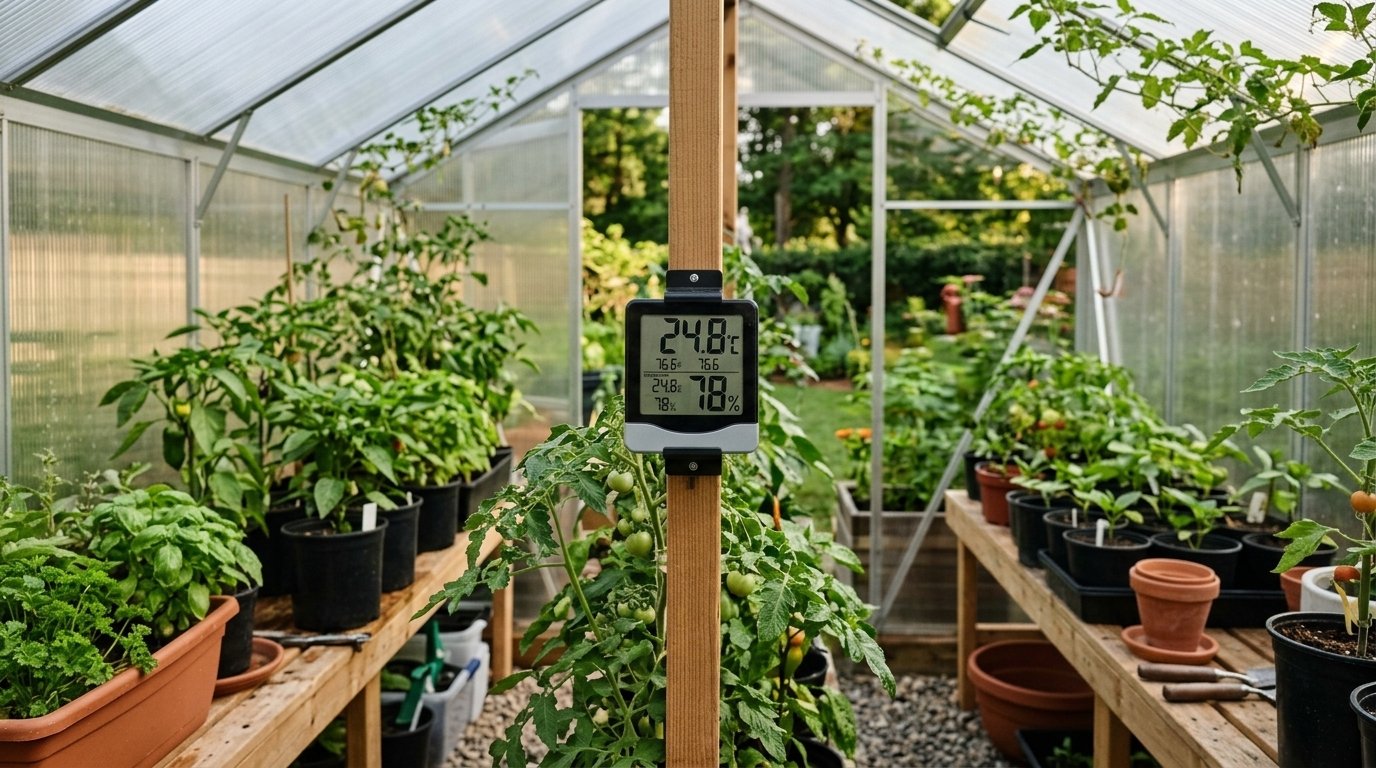
A five dollar thermometer and a habit of checking it will prevent more plant losses than almost anything else you could buy.
A greenhouse that overheats or won't hold heat in winter usually comes down to ventilation. Our complete guide to greenhouse ventilation and temperature control covers exactly how to size your vents and fans, and what to do differently in summer versus winter.
Getting Your Temperature and Humidity Right
What Temperature Should a Greenhouse Be?
The right temperature depends entirely on what you're growing. Cool-season crops and warm-season crops have genuinely different needs, and treating them the same is one of the most common reasons greenhouse plants underperform.
According to Colorado State University Extension, cool-season vegetables think lettuce, spinach, broccoli, and peas grow best with daytime temperatures between 50°F and 70°F and nighttime temperatures between 45°F and 55°F. These crops can tolerate occasional dips close to freezing without lasting damage, and they don't need intense light to thrive.Warm-season crops are a different story. Tomatoes, peppers, cucumbers, and squash need daytime temperatures between 60°F and 85°F and nighttime temperatures no lower than about 55°F, with higher light levels to produce well. This is also why cool-season and warm-season crops don't mix well in the same section of a greenhouse one group's ideal conditions can quietly stress the other.
Cool-Season vs. Warm-Season Greenhouse Temperatures
Source: Colorado State University Extension, CMG GardenNotes #723, "Growing Vegetables in a Hobby Greenhouse."
How to Keep Your Greenhouse From Overheating
Ventilation. is the single most important tool you have for temperature control, and it's almost always simpler than people expect. Once the sun hits a closed greenhouse, temperatures can climb quickly, sometimes rising 20 or 30 degrees above the outside air within an hour. The basic routine is straightforward:
Vent early, before the temperature climbs, rather than waiting until the greenhouse already feels hot.
Use roof vents first, since hot air rises and escapes fastest through the roof.
Add side vents or a propped door to create a cross-breeze that pulls in cooler outside air.
Close everything back up as the outside temperature drops in the evening, so you don't lose the heat you'll want overnight.
Warning: Sustained temperatures above roughly 90°F can damage or kill many greenhouse crops within a matter of hours. If you're away during the day, an automatic vent opener a simple wax-cylinder device that opens vents based on temperature alone, with no electricity required is worth the investment.
If you garden somewhere with intense summer sun, shade cloth and "damping down" (wetting the floor and benches so the water evaporates and cools the air) are both effective, low-cost ways to bring temperatures down further.
Managing Humidity Without Encouraging Disease
Greenhouses trap humidity along with heat, and that moisture has to go somewhere. Left unmanaged, it condenses on leaves overnight and creates ideal conditions for fungal problems like powdery mildew and botrytis (grey mould), particularly in cucumbers, squash, and other crops that already prefer humid air.The fix is mostly about airflow, not dehumidifiers. Good ventilation keeps humidity from stagnating, and watering the soil directly (rather than spraying foliage) keeps leaves drier overnight, when fungal disease takes hold most easily. If you need to raise humidity in a hot, dry climate, damping down the floor works in the opposite direction too it's a genuinely dual-purpose technique.
Common Mistake: Watering late in the day. Wet foliage that doesn't dry before nightfall is one of the most reliable ways to invite fungal disease into a greenhouse. Water in the morning instead, so leaves have all day to dry.
Watering: Why "Water Regularly" Isn't Good Enough Advice
Greenhouse soil dries out faster than an outdoor garden bed, because the enclosed structure raises temperatures and increases evaporation. That means a watering schedule that worked outdoors often under-waters greenhouse plants and a schedule that feels generous can just as easily over-water them, since there's no rain to naturally regulate moisture either way.
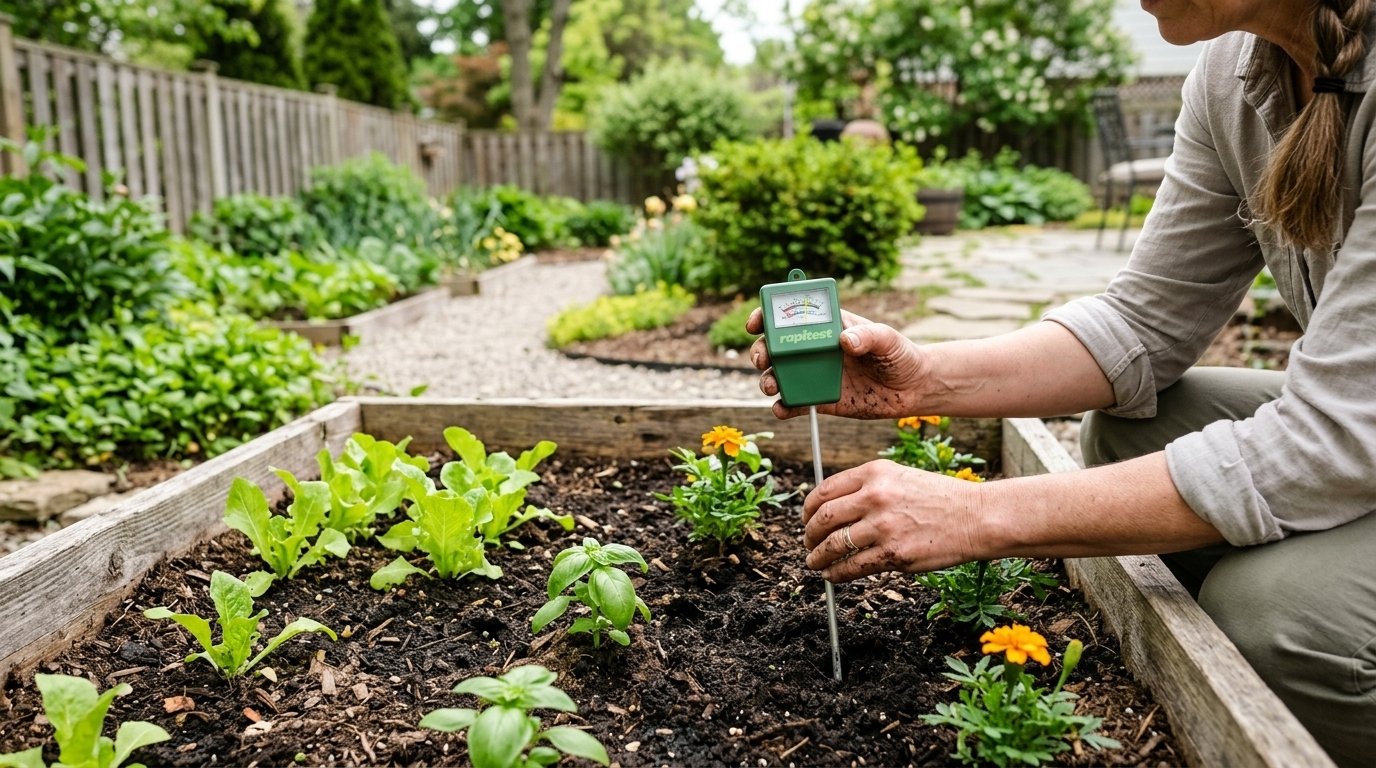
The better approach is simple: check before you water; don't guess. Push a finger an inch or two into the soil. If it's dry at that depth, water. If it's still moist, wait. This one habit solves more watering problems than any specific schedule could. A few refinements make it easier:
Seedlings and young transplants have shallow roots and typically need water daily, since they can't reach moisture stored deeper in the soil.
Established plants usually need water a few times a week rather than daily, depending on pot size, soil type, and the weather.
Water deeply each time rather than lightly and often this encourages roots to grow downward in search of moisture, which makes for a sturdier, more drought-tolerant plant.
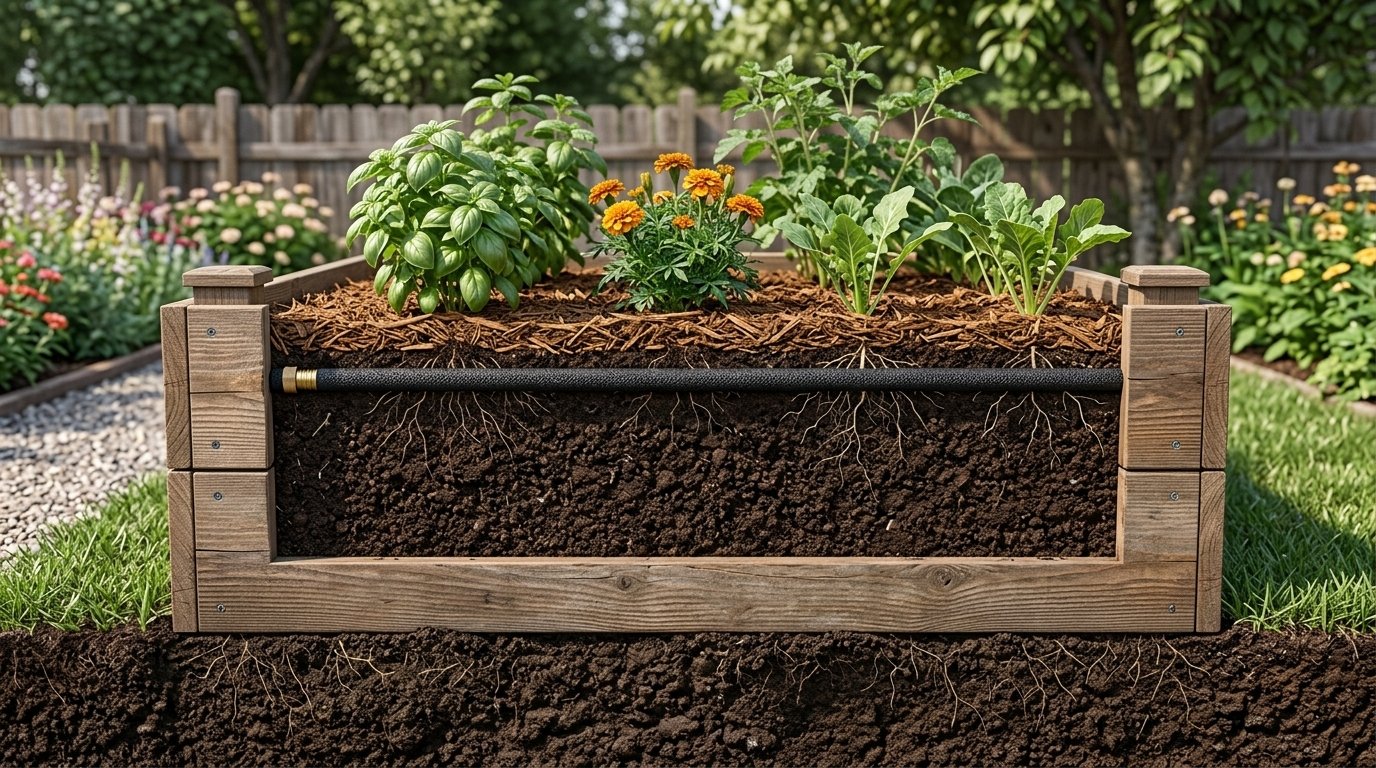
If you want a full system instead of hand-watering, our guide to greenhouse irrigation systems covers drip setup, automation, and troubleshooting.
Comparing Greenhouse Watering Methods
Soil: The Part Most Beginners Skip
Because a greenhouse can produce multiple harvests a year instead of just one outdoor growing season, the soil works harder and depletes faster. Skipping soil care is one of the quieter reasons greenhouse yields decline after the first year or two, even when watering and temperature are handled well.
Test Before You Guess
Soil pH determines how well your plants can actually absorb the nutrients in the soil, regardless of how much fertilizer you add.
According to the University of New Hampshire Extension, most vegetable crops grow best in soil with a pH between 6.0 and 6.8. Clemson University Cooperative Extension's Home & Garden Information Center gives a similar, slightly wider range of 5.8 to 6.5 for general vegetable gardening. Either range is a reasonable target the point is that soil outside these bounds, whether too acidic or too alkaline, makes nutrients less available even if they're technically present in the soil.
A basic home soil pH test kit will get you close enough for most greenhouse gardening. If you want a more complete nutrient breakdown, your local university Cooperative Extension office typically offers full soil testing for a modest fee a genuinely useful and underused resource for home gardeners.
Choosing Ground Beds, Raised Beds, or Containers
None of these three options is universally "best" each fits a different situation:
In ground borders give roots the most room to spread, which larger crops like tomatoes and cucumbers appreciate, but the soil is harder to fully replace once it's depleted.
Raised beds let you control the soil mix from the start and make replenishing it between seasons much easier, at the cost of some upfront construction.
Containers or grow bags offer the most flexibility you can move plants, isolate problems, and swap soil entirely but they dry out faster and need more frequent watering and feeding.
Keeping Soil Productive Season After Season
Continuous cropping pulls nutrients out of the soil faster than a single outdoor growing season does. A few practices keep the soil in good shape long-term:
Rotate crops so the same nutrient-hungry plants (like tomatoes) aren't grown in the same spot every cycle.
Add compost regularly rather than only at the start of the season, since greenhouse beds are often back in production again within weeks of a harvest.
Consider a cover crop during any gap between plantings even a quick cycle of oats or field peas, turned back into the soil before it flowers, adds organic matter and helps rebuild soil structure.
Soil problems tend to build up quietly over a season or two. Our guide to greenhouse soil & fertility covers testing, amendment, and how to keep your beds productive long-term.
Pollination: The Step Most Greenhouse Guides Skip Entirely
Here's something many new greenhouse growers don't expect: some crops may not produce fruit at all unless you help them pollinate.
Outdoors, wind and insects handle this automatically. Inside an enclosed greenhouse, especially with the doors and vents closed during cooler weather, that natural pollination often doesn't happen on its own particularly for cucumbers, squash, melons, and other members of the cucurbit family.
How to hand-pollinate cucurbits:
1. Identify a male flower (a thin stem with no swelling behind the petals) and a female flower (a small, swollen bulge just behind the petals this is the beginning of the fruit).
2. Remove a male flower and gently peel back its petals to expose the pollen-covered center.
3. Brush the pollen directly onto the center of a female flower.
4. Repeat for each female flower you want to set fruit, ideally in the morning when pollen viability is highest.
If hand-pollination sounds like more than you want to manage, there's an easier option:
parthenocarpic varieties, which set fruit without pollination at all, and.
gynoecious varieties, which produce mostly female flowers and are bred specifically for greenhouse growing. Seed catalogues typically label both explicitly, and choosing them can remove this step from your routine entirely.
Tomatoes and peppers are usually much less of a concern they're largely self-pollinating, and a gentle shake of the plant or a light breeze from a fan is often enough to help pollen move within the flower.
We cover the full pollination routine exact hand-pollination steps, ideal temperature and humidity ranges, and when a commercial pollinator actually makes sense in our dedicated guide to greenhouse pollination.
Preventing Pests and Disease in an Enclosed Space
A greenhouse blocks many outdoor pests simply by being an enclosed structure, but the same warm, humid conditions that help plants grow can also help the pests and fungal problems that do get in.A short, consistent routine prevents most issues before they start:
Inspect plants regularly, checking the undersides of leaves where pests like aphids and spider mites tend to hide.
Remove dead or dying plant material promptly it's one of the most common places for pests and fungal spores to overwinter or spread.
Keep good airflow, since stagnant, humid air is what allows powdery mildew and botrytis to take hold in the first place.
Wash your hands and tools after handling a diseased plant, so you don't spread the problem to healthy ones.
Do a full clean once a year, scrubbing down glass or plastic panels and benches this also lets more light through, which helps plant growth directly.
This is a broad prevention framework rather than species-by-species pest identification, which depends heavily on your specific region and crops. Your local Cooperative Extension office is generally the most reliable source for identifying a specific pest or disease you're seeing and getting a locally relevant recommendation.
If something's already showing up on your plants, our guide to greenhouse pest & disease control helps you identify exactly what you're dealing with and how to respond.
What to Grow First: Beginner-Friendly Greenhouse Crops
One of the most useful greenhouse gardening tips for beginners: the best first crops are the ones that forgive small mistakes while you're still learning your greenhouse's particular quirks.
The best first crops are the ones that forgive small mistakes while you're still learning your greenhouse's particular quirks; every structure behaves a little differently depending on its orientation, materials, and local climate.
Beginner Greenhouse Crop Difficulty
Start with two to four crops in your first season rather than trying to fill every inch of space. It's easier to learn what's working and notice early what isn't with a smaller, more manageable planting than with a greenhouse packed full of a dozen different crops on their own schedules.
Not sure which crops are actually worth the space? Our complete guide to what to grow in a greenhouse breaks down the best vegetables, herbs, and fruit for your setup — and a few you're better off skipping.
Making the Most of a Small Greenhouse
Greenhouse space is almost always smaller than an outdoor garden, so a few habits go a long way toward getting more out of the square footage you have:
Plant in succession. As soon as one crop finishes, have the next one ready to go into that spot rather than leaving the bed empty.
Use vertical space. Shelving for seedlings and trellising for vining crops like cucumbers both free up valuable floor and bench space.
Combine compatible crops. A finishing tomato plant, for example, can shade young lettuce or spinach seedlings started at its base as long as both are within a compatible temperature range (see the table above).As a general planning reference, many gardeners use a rule of thumb of about 20 to 25 square feet of greenhouse space per person being fed from it. This figure comes from common gardening practice rather than a specific research study, so treat it as a helpful starting point for planning your greenhouse size, not a precise requirement.
Greenhouses and Your Growing Zone
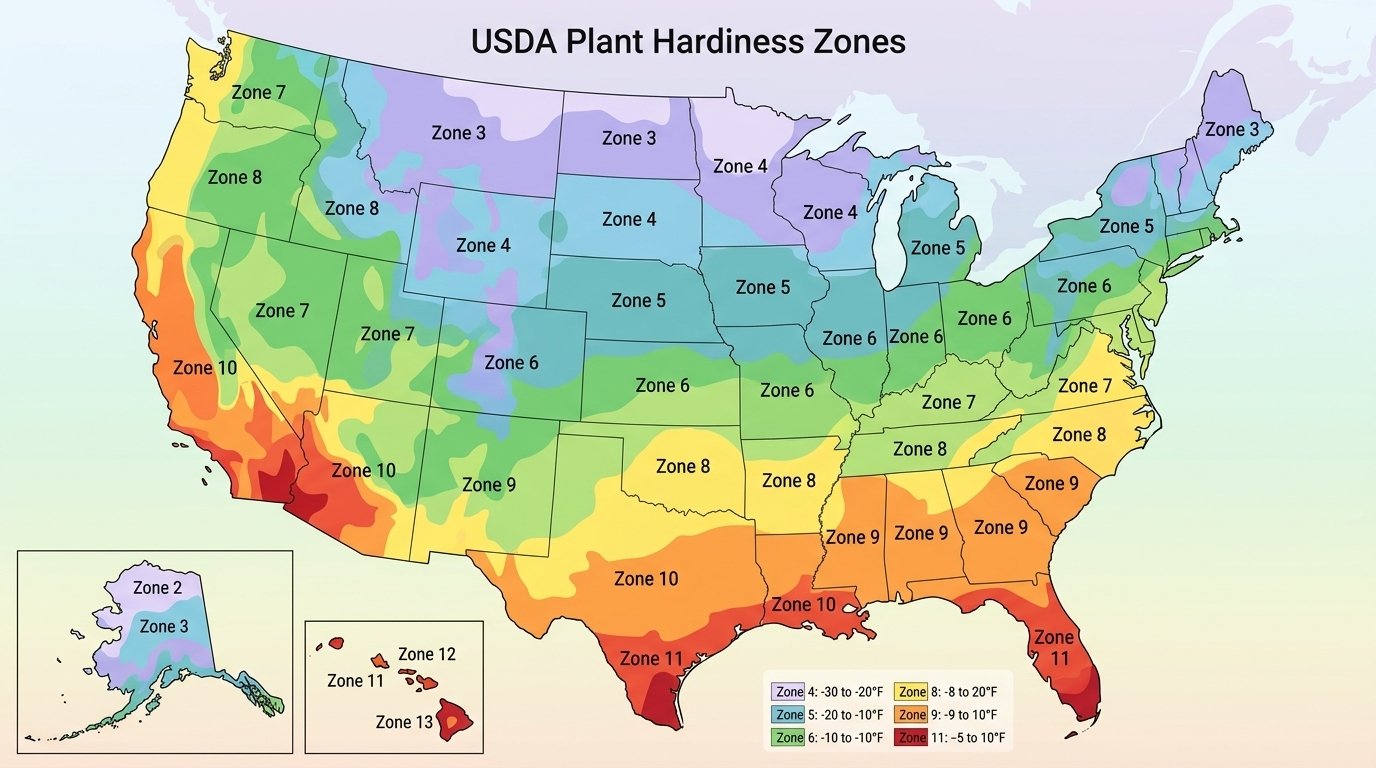
A greenhouse doesn't erase your climate it extends it. Understanding your USDA Plant Hardiness Zone, available through the USDA's Plant Hardiness Zone Map, helps you set realistic expectations for how far a greenhouse can actually stretch your growing season.
In a milder zone, an unheated greenhouse alone might get you through winter with cool-season crops like spinach and lettuce. In a colder zone, growing warm-season crops through winter typically requires supplemental heat, and sometimes supplemental light as well, particularly during short winter days when natural sunlight is limited.
It's worth being realistic here: according to Colorado State University Extension, using artificial lighting specifically to grow vegetables through winter (as opposed to simply starting seedlings) is generally not cost-effective for a home greenhouse, since the cost of running lights usually outweighs the value of the harvest. If you're set on winter production, a well-designed solar greenhouse with good thermal mass and genuine attention to insulation will typically get you further than lighting alone.
A Simple Setup Checklist Before You Plant Anything
Greenhouse Gardening Setup Checklist
Install a thermometer/hygrometer at plant height so you can monitor both temperature and humidity
Decide your ventilation routine (manual vents, an automatic vent opener, or both)
Test your soil's pH before your first planting
Choose 2–4 beginner-friendly crops appropriate for your first season
Set a watering check-in routine (check soil moisture rather than a fixed schedule)
[Note which of your crops will need hand-pollination or a parthenocarpic variety
Plan a basic sanitation routine (removing dead plant material, cleaning tools between uses)
Keep these greenhouse gardening tips in mind to avoid the most common early mistakes:
Common Greenhouse Gardening Mistakes to Avoid
1. Watering on a fixed schedule instead of checking actual soil moisture.
2. Waiting too long to ventilate on sunny days, letting the greenhouse overheat before opening vents.
3. Growing cool-season and warm-season crops side by side without accounting for their different temperature needs.
4. Skipping soil testing and assuming fertilizer alone will solve poor growth.
5. Forgetting that some crops need hand-pollination indoors, then wondering why cucumbers or squash aren't setting fruit.
6. Overcrowding the greenhouse in the first season, making it harder to spot which plants are actually struggling.
7. Watering foliage late in the day, leaving leaves wet overnight and inviting fungal disease.
Frequently Asked Questions
How often should I water greenhouse plants?
Water based on soil moisture rather than a fixed schedule. Check the top inch or two of soil with your finger, and water deeply when it's dry. Seedlings typically need daily watering because of their shallow roots, while established plants usually need water only a few times a week.
What temperature should a greenhouse be kept at?
It depends on what you're growing. Cool-season crops do best between 50°F and 70°F during the day and 45°F to 55°F at night. Warm-season crops need 60°F to 85°F during the day and no lower than about 55°F at night, according to Colorado State University Extension.
Do I need to pollinate greenhouse plants by hand?
Sometimes. Cucumbers, squash, and other cucurbits often need hand-pollination indoors because wind and insects have limited access. Tomatoes and peppers are largely self-pollinating and usually just need a gentle shake or a light breeze from a fan.
Is it cost-effective to grow vegetables in a greenhouse through winter?
It depends on your setup. Relying mainly on supplemental lighting for winter vegetable production is generally not cost-effective, according to Colorado State University Extension. A well-insulated, passive-solar greenhouse with good thermal mass tends to perform better for winter growing than lighting alone.
What's the best soil pH for greenhouse vegetables?
Most vegetable crops grow best in soil with a pH between 6.0 and 6.8 according to the University of New Hampshire Extension, while Clemson University Cooperative Extension recommends 5.8 to 6.5 for general vegetable gardening. A basic home pH test kit is enough to check where your soil currently sits.
Why is there mould or fungal growth in my greenhouse?
This is usually a sign of excess humidity combined with poor airflow, often made worse by watering foliage late in the day. Improving ventilation and watering the soil directly, rather than the leaves, are the two most effective fixes.
How much space do I need per plant in a greenhouse?
This varies by crop, but as a general planning rule of thumb, many gardeners allow about 20 to 25 square feet of greenhouse space per person being fed from it. Treat this as a starting point for planning rather than a strict requirement.
Putting These Greenhouse Gardening Tips Into Practice
Greenhouse gardening success comes down to a handful of connected habits rather than any single trick: watching temperature and humidity, watering based on what the soil actually needs, keeping the soil itself healthy between plantings, helping pollination along where the greenhouse blocks it naturally, and staying ahead of pests and disease with good airflow and basic sanitation.None of this requires expensive equipment to get right. A thermometer, a habit of checking soil before watering, and a season or two of paying attention to how your specific greenhouse behaves will teach you more than any single article can.If you're still deciding on a structure, our guide to choosing the right greenhouse walks through the sizing and material decisions that shape everything covered here. If you're ready to go deeper on any one of these areas, our dedicated guides to greenhouse ventilation, greenhouse watering systems, and the best vegetables to grow in a greenhouse by season each pick up where this article leaves off.